
Last updated November 20, 2026
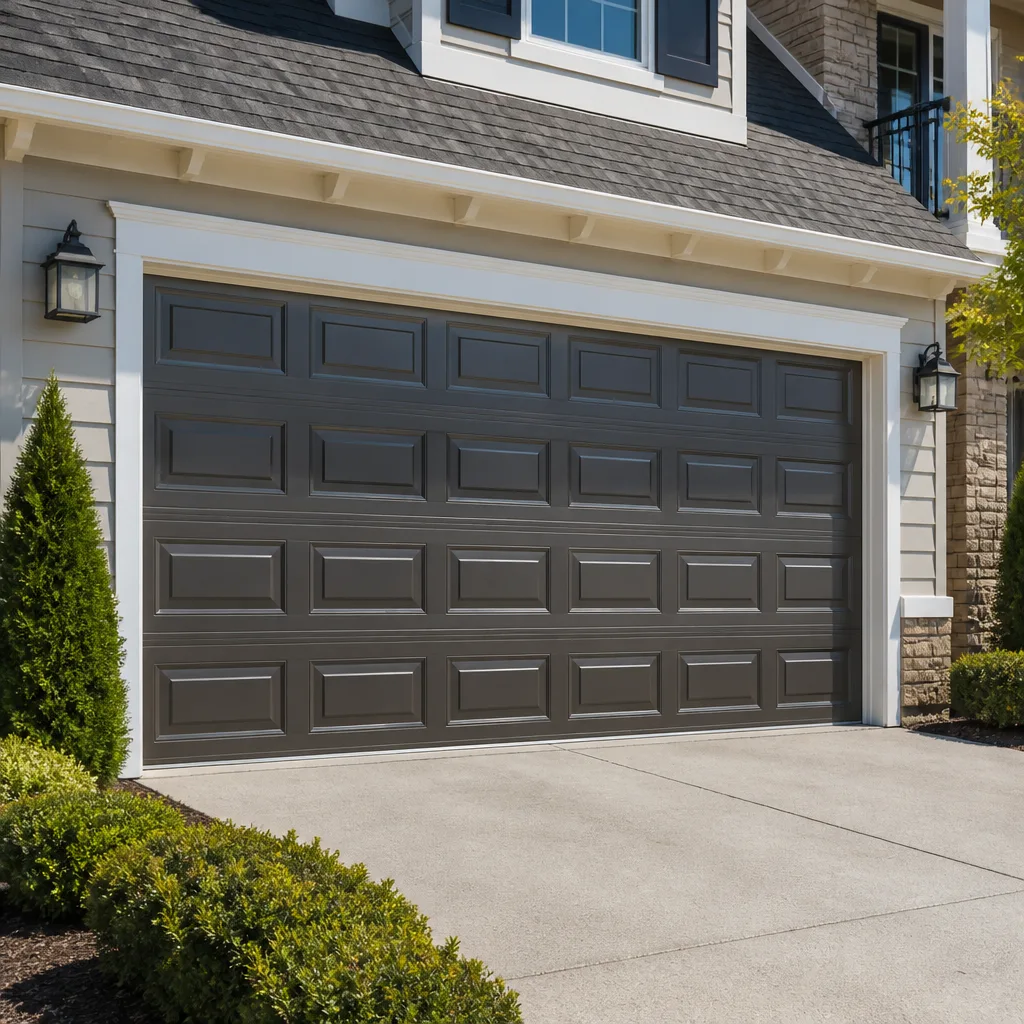 Raised-panel steel
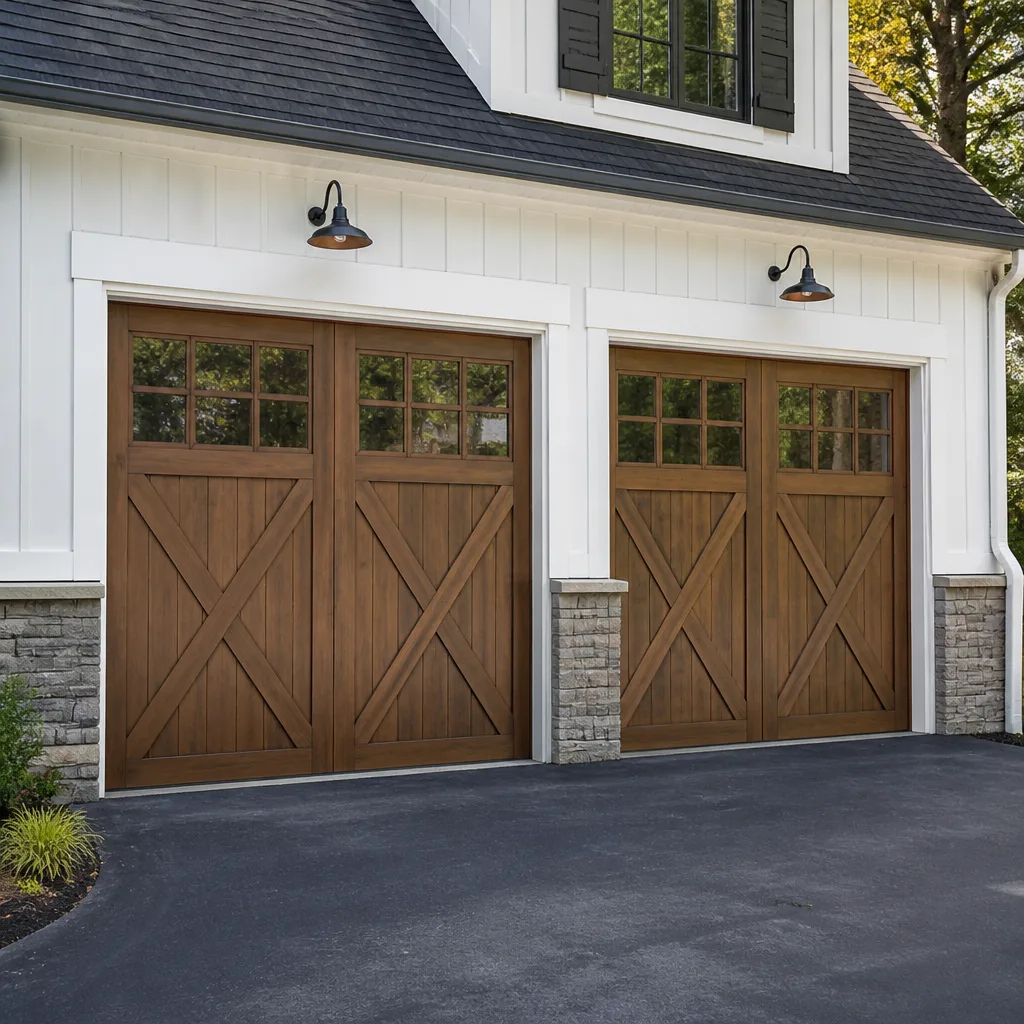 Carriage house
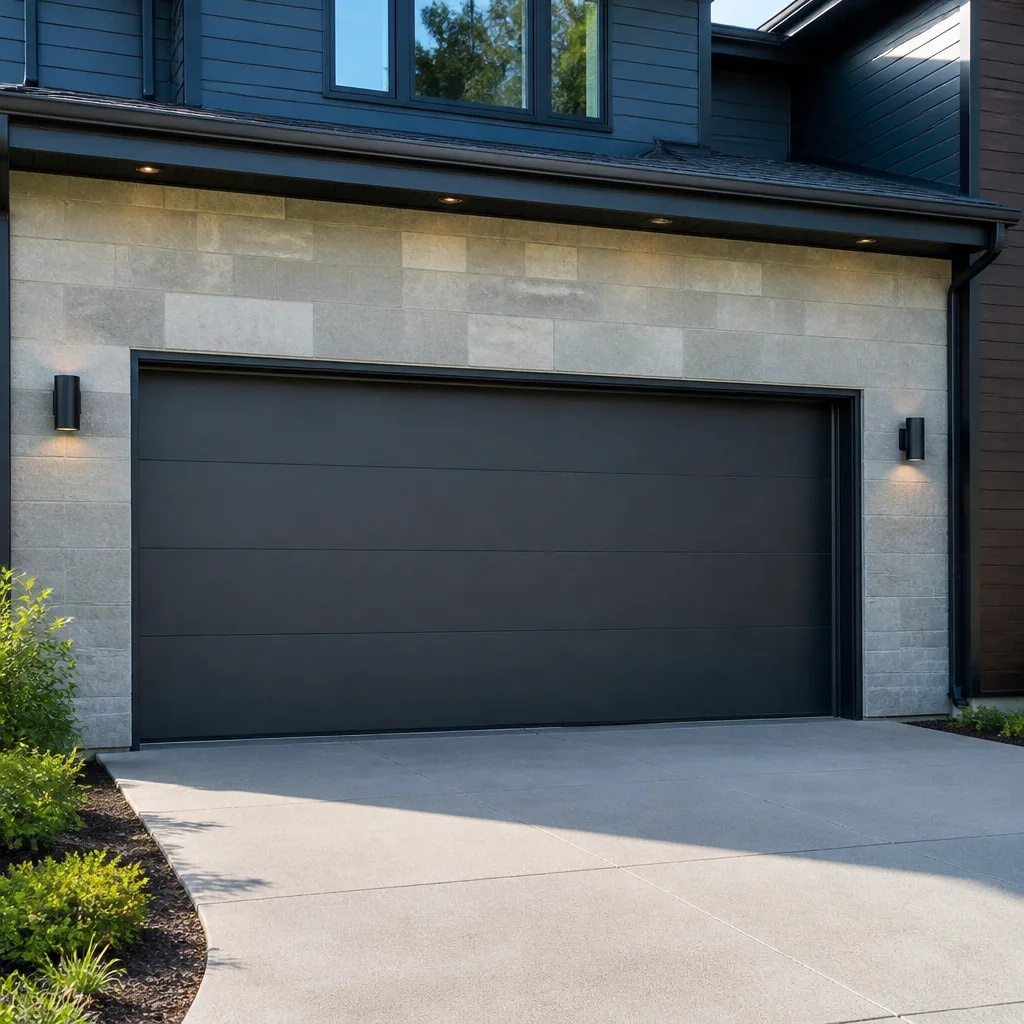 Modern flush
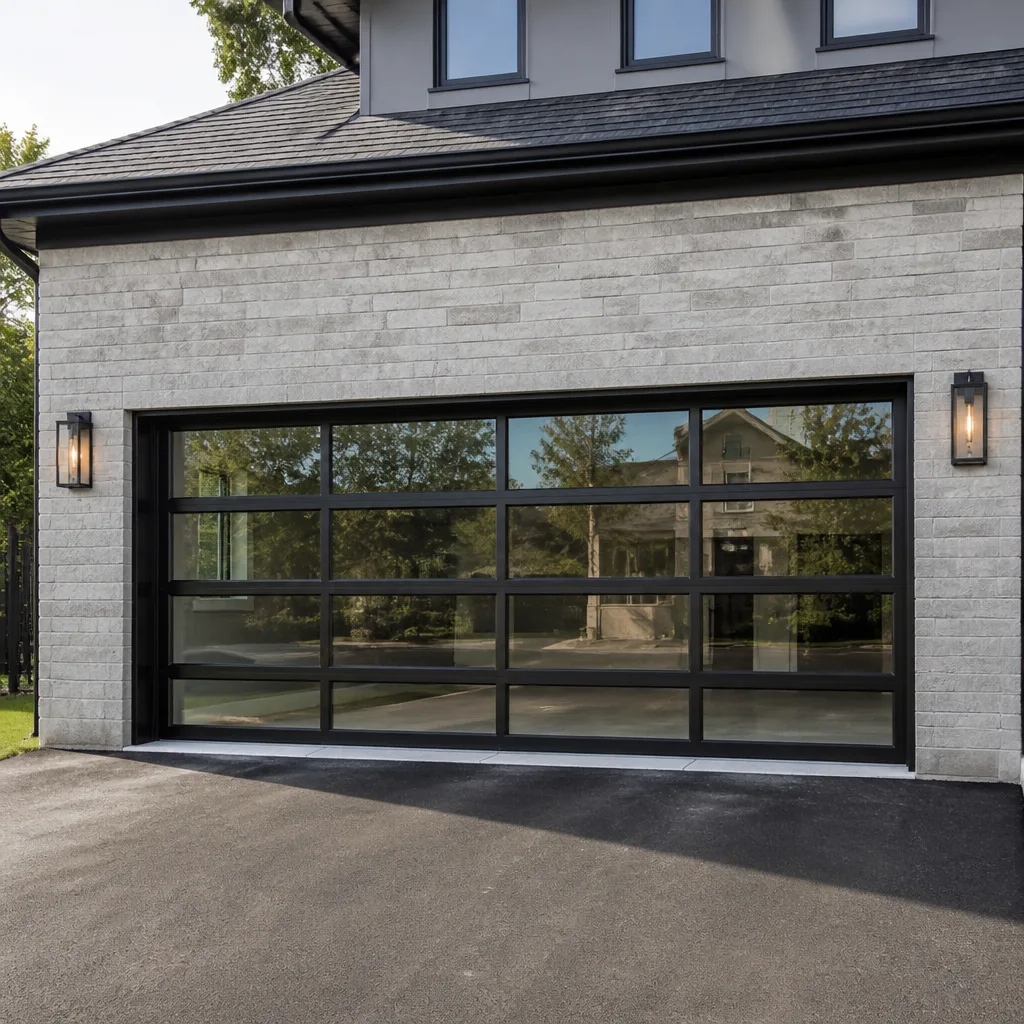 Full-view glass
 LiftMaster openers
 Chamberlain openers
Full 25-point door and opener safety check with every visit - springs, cables, rollers, tracks, and your LiftMaster or Chamberlain opener included
You get a price before we start. It does not change when the pro arrives.
Get your free estimateGarage Door Warning Signs: A Meadow Hills Homeowner’s Reference Guide
A garage door that hesitates for half a second before moving isn’t a quirk. It’s the opener working against a friction or balance problem that’s quietly shortening the motor’s lifespan with every cycle. Most of the failures we diagnose in Meadow Hills don’t arrive without warning. They send signals for weeks first: a grind that wasn’t there last month, a spring that looks a little straighter than it used to, a door that drifts down a few inches after you close it. The trouble is that homeowners can’t tell which signals are cosmetic noise and which are mechanical urgency. This guide gives you a clear triage system: what to watch, what to schedule, and what means stop using the door right now.
Quick Answer
Garage door warning signs fall into three categories: cosmetic issues you can watch, mechanical problems to schedule within 30 days, and safety hazards that mean stop using the door immediately. The most urgent signals are a snapped spring (a loud bang followed by a door that won’t lift), a frayed or kinked cable, and a door that reverses unpredictably or comes down too fast. Grinding, popping, and scraping sounds each point to a different failing component, and identifying which sound you’re hearing is the fastest way to know how soon you need a technician in Meadow Hills.
Styles & brands we work with
- Raised-panel steel
- Carriage house
- Modern flush
- Full-view glass
- LiftMaster openers
- Chamberlain openers
Table of Contents
- The Three-Tier Urgency System: Watch It, Schedule It, Stop Using It
- What the Sound Is Telling You: Grinding vs. Popping vs. Scraping
- Reading Your Springs and Cables: What Imminent Failure Looks Like
- Opener Strain vs. Mechanical Resistance: Why the Difference Changes the Fix
- Cold-Climate Warning Signs Specific to Meadow Hills
- The 10-Point Visual Inspection You Can Do from the Driveway
- Brand-Specific Signals: LiftMaster, Chamberlain, Wayne Dalton, and More
- Repair or Replace? How to Read the Door’s Overall Condition
The Three-Tier Urgency System: Watch It, Schedule It, Stop Using It
Every warning sign on a garage door belongs in one of three buckets, and putting it in the right bucket is the single most useful thing a homeowner can do. The system is simple: cosmetic issues go on a watch list, functional problems get scheduled within 30 days, and safety hazards mean the door doesn’t move again until a technician has seen it.
Tier 1: Watch It (Cosmetic or Slow-Moving)
- Faded or chalky paint on the door panels
- A single small dent that doesn’t affect how the door seats in the frame
- Slightly noisy operation that hasn’t gotten worse over several weeks
- A weather seal that’s starting to look tired but still contacts the floor
- One remote that needs a firmer press than it used to
None of these threaten the door or anyone near it. They’re maintenance items, and they can wait for a convenient time to book a tune-up or a panel repair.
Tier 2: Schedule It (Functional, Within 30 Days)
- Grinding or scraping that started recently and is getting louder
- The door drifts down a few inches after closing, or doesn’t stay fully open
- The opener strains audibly at the start of a cycle
- Rollers that are flat-spotted or wobbling in their tracks
- A remote or wall button that works intermittently
- Visible rust on hinges or track sections
These are real mechanical problems, but they’re not emergencies yet. Booking garage door repair within a few weeks keeps a Tier 2 issue from turning into a Tier 3 one.
Tier 3: Stop Using the Door (Safety Hazard)
- A loud bang from above the door, followed by a door that won’t lift (broken spring)
- A visibly kinked, frayed, or hanging cable
- The door reverses on its own, or closes with visible speed and force
- The door hangs crooked, with one side higher than the other
- A torsion spring with a visible gap in the coil
- Any door that has come off one track
Tier 3 means the door stays down (or up, if that’s where it sits) and nobody forces it. Springs and cables are under extreme tension, and a failure under load can injure whoever is standing nearby. A trained technician handles these repairs because the tools and the technique exist specifically for releasing that tension safely. If you’re in Meadow Hills and you’re not sure which tier your issue falls into, call and describe it; that’s a two-minute conversation that can save you a much bigger repair.
What the Sound Is Telling You: Grinding vs. Popping vs. Scraping
Garage door sounds aren’t interchangeable. A grind, a pop, and a scrape each point to a different failing part, and knowing which one you’re hearing tells you what to inspect and how soon. Before you diagnose anything, listen with the door moving and nothing else running in the garage.
Grinding: Metal-on-Metal Friction
Grinding usually means dry or worn rollers, dry hinges, or a torsion tube that’s lost lubrication at the bearing plates. It’s a mid-priority sound: not usually dangerous yet, but every cycle it continues wears the moving parts faster. Left alone long enough, a dry bearing can seize and put real load on the opener motor. Schedule this one.
Popping: Spring or Cable Under Load
A pop that happens once, loud, often followed by the door becoming very heavy, is a spring letting go. A series of smaller pops during travel often points to a cable jumping its drum or a hinge plate flexing. Treat a single loud pop as a stop-using signal until you’ve confirmed the springs and cables are intact.
Scraping: Contact Between Door and Frame
Scraping is the door itself rubbing against the track, the frame, or the floor seal. It usually means a track has been knocked out of alignment, a roller has come out of its channel, or the door has shifted on its hinges. It’s uncomfortable to hear because something is being damaged, and it should be looked at soon rather than watched.
Rattling or Buzzing: Opener Mounting or Logic Board
Rattling tends to be loose mounting hardware or a chain that needs tension adjustment. Buzzing from the opener head itself, especially when the door doesn’t move, points to the logic board or capacitor. That’s the kind of symptom where brand familiarity matters: a LiftMaster or Chamberlain unit has specific diagnostic codes and LED blink patterns, and a technician who works on those systems daily reads them quickly.
Reading Your Springs and Cables: What Imminent Failure Looks Like
Springs and cables are the parts of a garage door that can hurt someone, and they’re the parts homeowners are most often told to “check for wear” without being told what wear actually looks like. Here’s what to look for, standing safely on the floor with the door closed and no one operating it.
What to Look For on Torsion Springs
- A visible gap in the coil. A torsion spring that has snapped shows a clear separation, usually near one end. The door will feel extremely heavy if you try to lift it by hand with the opener disengaged.
- Rust streaking along the wire. Surface discoloration is common; deep pitting and flaking mean the wire is thinning.
- Uneven spacing between coils when the door is down, which can signal the spring is losing tension.
- A winding cone that has moved. Paint or a marker line across the cone and the spring is a useful reference; if the line no longer matches, the spring has shifted.
What to Look For on Extension Springs
- Stretched length. Compare the two springs; a visibly longer one has lost tension.
- A missing safety cable. Extension springs should have a cable running through the center to contain the spring if it breaks. If it’s missing, that’s a safety gap worth addressing.
- Visible gaps at the hook ends where the spring attaches.
What to Look For on Cables
- Fraying or broken strands near the drum or the bottom bracket.
- Kinks or a cable that’s jumped the drum, which shows as a slack loop hanging where it shouldn’t.
- Rust staining where a cable passes through a bracket or guide.
Do not touch, wind, or attempt to adjust any of these components. Torsion springs are wound to hundreds of pounds of tension, and releasing that tension without the right winding bars and technique can cause serious injury. If you see any of the signals above, keep the door closed and call for spring repair. Our technicians have up to 10 years of experience with exactly this work, and spring repair is a primary service for us, not an afterthought. “Parts on hand, not on order” is the way we like to put it.
Opener Strain vs. Mechanical Resistance: Why the Difference Changes the Fix
When a door struggles to move, homeowners often assume the opener is going bad. Sometimes it is. Often it isn’t, and the distinction matters because the fix is completely different: replacing an opener that was fighting a binding door wastes money, and it just buys you the same failure again a few months later.
How to Tell the Difference
- Disengage the opener. Pull the release handle so the door runs on its springs alone. This is safe on a properly working door with the door in the down position.
- Lift the door by hand. A balanced door moves with moderate effort and stays where you leave it, roughly halfway up.
- If lifting is heavy or the door slams back down, you have a balance or spring problem. The opener was compensating for it, and the fix is spring or track work, not a new motor.
- If the door lifts easily by hand but the opener still strains, you have an opener problem: a failing capacitor, a worn drive gear, or a logic board issue.
- Re-engage the opener by hand and let it run one full cycle to confirm what you heard.
Signs the Opener Itself Is the Problem
- The motor buzzes but the door doesn’t move, even after disengaging and re-engaging
- The door moves only a few inches and stops, with the opener light flashing in a repeating pattern
- The opener runs but the chain or belt doesn’t turn
- The wall button works but every remote has stopped, which points to the receiver or the logic board
When the diagnosis lands on the opener, brand familiarity saves time. We work on LiftMaster, Chamberlain, Genie, Craftsman, and the rest of the eight brands most commonly installed in homes, so we’re diagnosing the unit you already own rather than recommending a replacement by default. If the unit is genuinely past the point where repair makes sense, we’ll tell you that plainly and quote a replacement. Our garage door opener repair service exists precisely because most openers in this area still have plenty of life left.
Cold-Climate Warning Signs Specific to Meadow Hills
A garage door in Meadow Hills lives a harder life than the same door in a mild climate, and the warning signs change with the seasons. Spring and fall are when we see the most door problems, because the door has just gone through a temperature swing of thirty or forty degrees in a matter of weeks.
Cold-Soak Spring Brittleness
Steel springs get more brittle as they get colder. A spring that’s been slowly losing tension through the summer is most likely to snap on the first genuinely cold morning of the season, often right after the door hasn’t been used much. If the door has been sitting for several cold days, open it and listen on the first cycle back. A door that groans or lifts unevenly on that first cycle is telling you the spring is stressed.
Frost-Related Seal Failure
When the bottom seal freezes to the concrete, the opener pulls the door up against a stuck seal, which loads the whole mechanism. The first symptom is often a slight hesitation at the start of travel, followed by the door sticking again the next morning. Look for a seal that’s compressed flat, cracked, or visibly leaving a gap when the door closes. A worn seal is cheap to replace and expensive to ignore.
Contraction in the Track and Frame
Wood framing and steel track expand and contract with temperature. That means a track that was aligned in August can be slightly out of alignment in January, which shows up as scraping at one corner of the door or a roller that binds on the way up. If a door that ran quietly in summer complains in winter, seasonal contraction is the first suspect.
Ice and Snow at the Threshold
Snow pushed against the door can put weight against the bottom panel and knock the bottom section out of square. After a heavy snow, clear the area in front of the door before running it.
The 10-Point Visual Inspection You Can Do from the Driveway
This inspection takes about five minutes, requires no tools, and catches most of the serious warning signs before they become failures. Do it once a month and again after any big temperature swing.
- Look down the closed door from the side. The bottom edge should be parallel to the floor. A gap on one side means the door is out of balance.
- Check the springs. Door closed, nobody near it. Look for a gap in the coil, heavy rust, or a stretched extension spring.
- Check the cables. Look at the bottom brackets and the drums at the top. No fraying, no kinks, no slack loops.
- Run the door and listen. Note any grind, pop, or scrape and which part of the travel it happens on.
- Watch the door’s speed. It should move at a steady pace. If it speeds up near the bottom or slams, stop it and call.
- Test the safety reverse. Place a piece of wood or a brick on the floor under the door and close it. The door should reverse when it hits the obstruction.
- Test the photo-eye safety sensors. Wave a hand in front of them while the door is closing. It should reverse. If it doesn’t, stop using the door until it’s fixed.
- Look at the rollers. Any that are flat-spotted, cracked, or wobbling should be replaced.
- Check the tracks. Run your hand along the inside edge. No dents, no rust, no bent sections.
- Look at the weather seal. It should contact the floor along the whole width and not leave gaps.
Anything you find in the first three steps belongs in Tier 3 if it’s severe and Tier 2 if it’s mild. Steps six and seven are the ones that protect people, and a door with a failed safety reverse shouldn’t be used until the opener is serviced.
Brand-Specific Signals: LiftMaster, Chamberlain, Wayne Dalton, and More
Different brands fail in different ways, and the signals a homeowner should watch for change with the equipment. We work on eight of the most widely installed brands in the country: LiftMaster, Chamberlain, Genie, Clopay, Amarr, Wayne Dalton, Craftsman, and Raynor. That breadth is the reason a technician can tell you what’s happening with the system you own rather than guessing.
LiftMaster and Chamberlain Openers
These two share a lot of design language, and their diagnostic signals are similar. An opener that blinks a repeated pattern on its LED is usually reporting a specific fault code, and a technician who reads those daily can decode it in a minute. Common signals include a run that stops mid-travel (often a force-setting or travel-limit issue) and a remote that stops working while the wall button still does (usually the receiver or a bad battery in the remote, in that order).
Wayne Dalton Doors
Wayne Dalton panels are common on newer construction, and the most frequent signals we see are hinge and roller wear at the panel joints. Those tend to announce themselves as a rattling that gets louder over a few months.
Craftsman and Raynor Systems
Craftsman openers are often older units still running on original hardware, which means capacitors and drive gears are the common failure points. A Craftsman that hums but doesn’t move is usually a capacitor. Raynor doors tend to hold up well, but their torsion systems still need the same spring inspection as any other brand.
None of this is a reason to replace a system wholesale. Garage doors are all we do, and we do every part of it, which means the answer to a brand-specific problem is usually the correct part and the correct adjustment, not a new door.
Repair or Replace? How to Read the Door’s Overall Condition
Some warning signs are worth fixing one at a time. Others are the door telling you it’s at the end of its service life. The distinction comes down to how many systems are failing at once and whether the door’s structure is sound.
Repair Makes Sense When:
- One component has failed and the rest of the door is in good shape
- The panels are intact and the door still runs in its tracks without rubbing
- The springs, rollers, or opener are the only problems
- The door is structurally sound and the issue is mechanical
Replacement Deserves a Serious Look When:
- Multiple panels are dented, rusted through, or separating at the seams
- The door has come off track more than once
- Springs, cables, rollers, and hinges are all showing wear at the same time
- The opener is failing and the door itself is past its useful life
- You want a different door style, insulation level, or window configuration
Replacement isn’t a same-day decision. It’s measured, ordered, and scheduled, with a written price before anything is ordered. If you’re weighing a garage door installation against a repair, the honest answer usually comes down to how many separate failures you’re looking at and how long you plan to stay in the home.
Common Mistakes to Avoid
- Forcing a door with a broken spring. A door with a snapped spring is extremely heavy, and pulling it up by hand can cause the door to come down on whoever is underneath. Keep it closed.
- Ignoring a single loud pop. A pop from the spring area is often the sound of a spring failing. Treat it as a stop-using signal until a technician confirms otherwise.
- Replacing the opener when the door is out of balance. A new motor fighting a binding door will fail the same way the old one did. Fix the balance first.
- Adjusting torsion springs without the right tools. This is the most dangerous repair on a garage door. It’s the one job where the right call is always a technician.
- Letting a frost-stuck seal keep running. In Meadow Hills, a seal that freezes to the floor every morning is loading the opener and the springs on every cycle. Replace the seal instead of cycling through it.
- Skipping the safety reverse test. A door that doesn’t reverse on contact is a hazard to anyone standing under it, including pets. Test it monthly.
- Waiting for a grinding noise to become a failure. Grinding is cheap to fix early and expensive to fix late, because it wears everything it touches.
See the difference
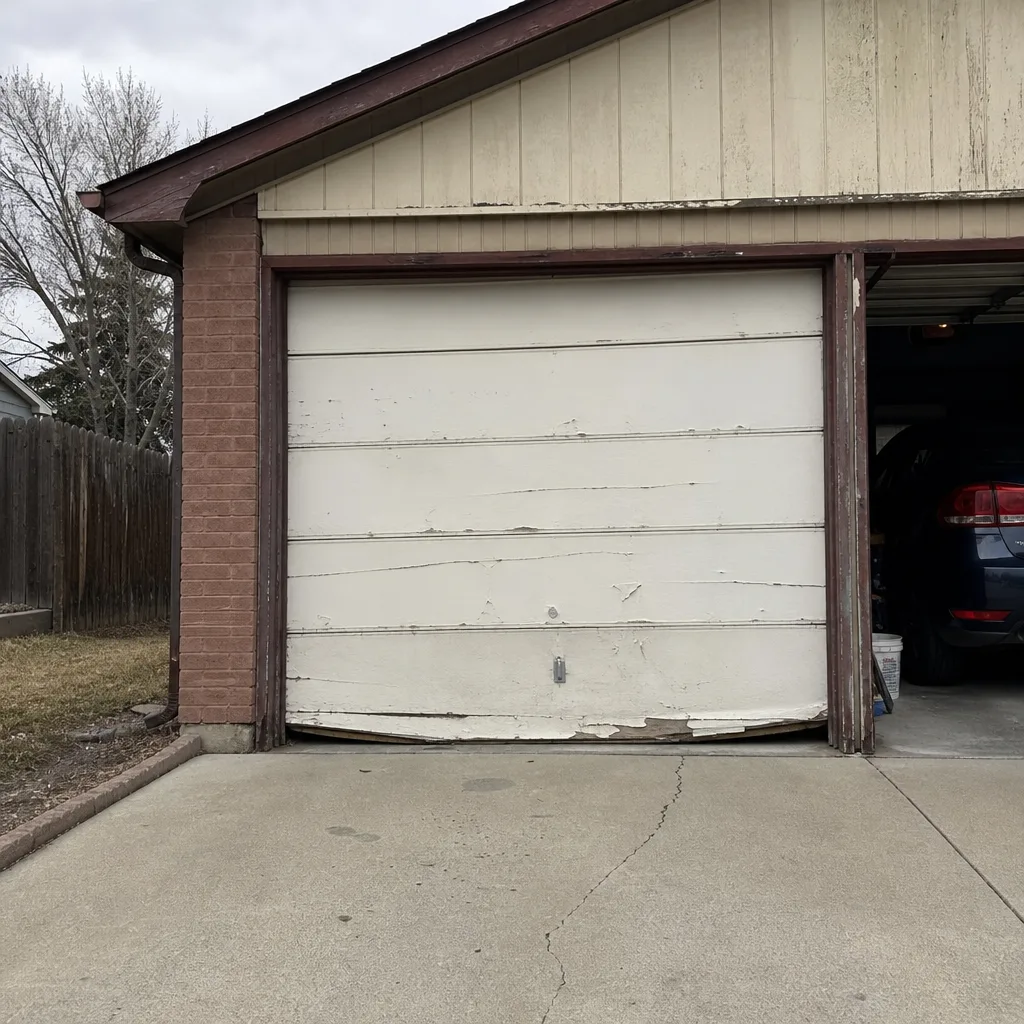 Before
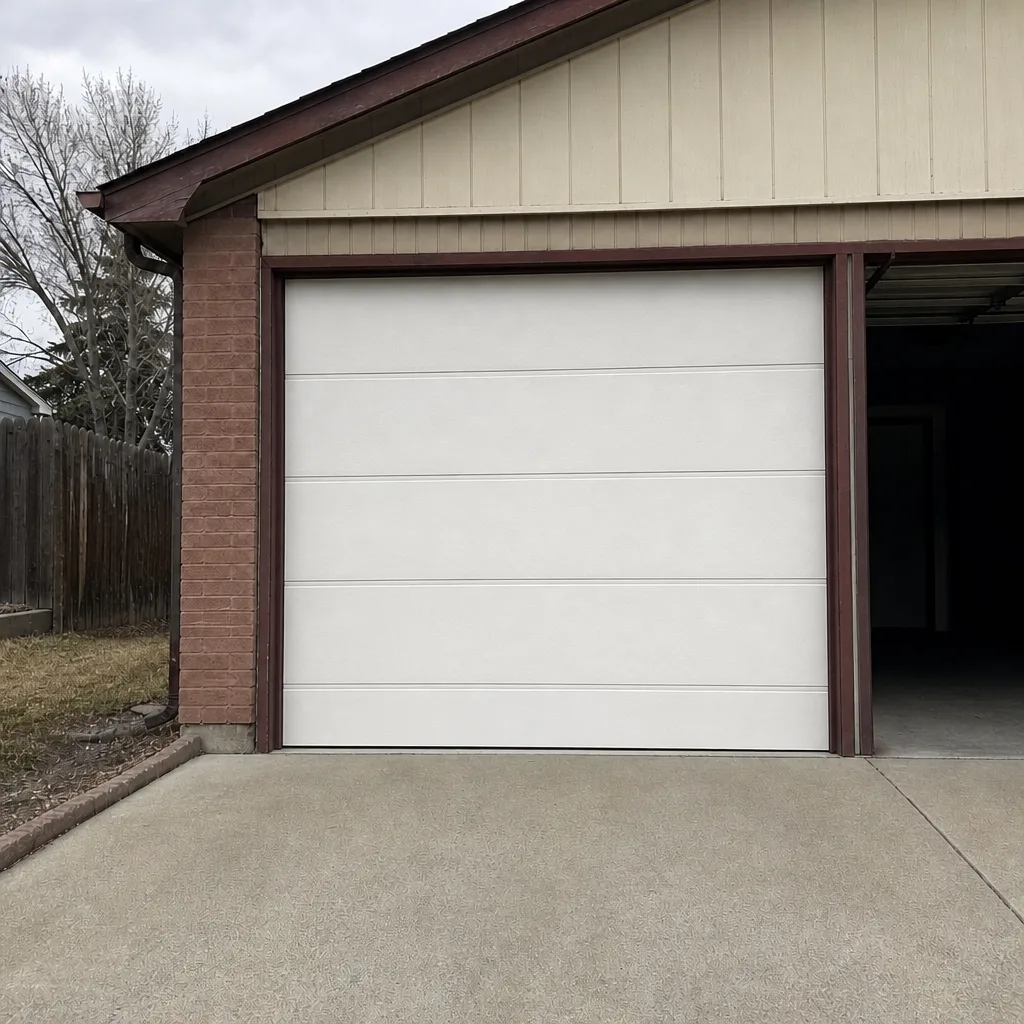 After
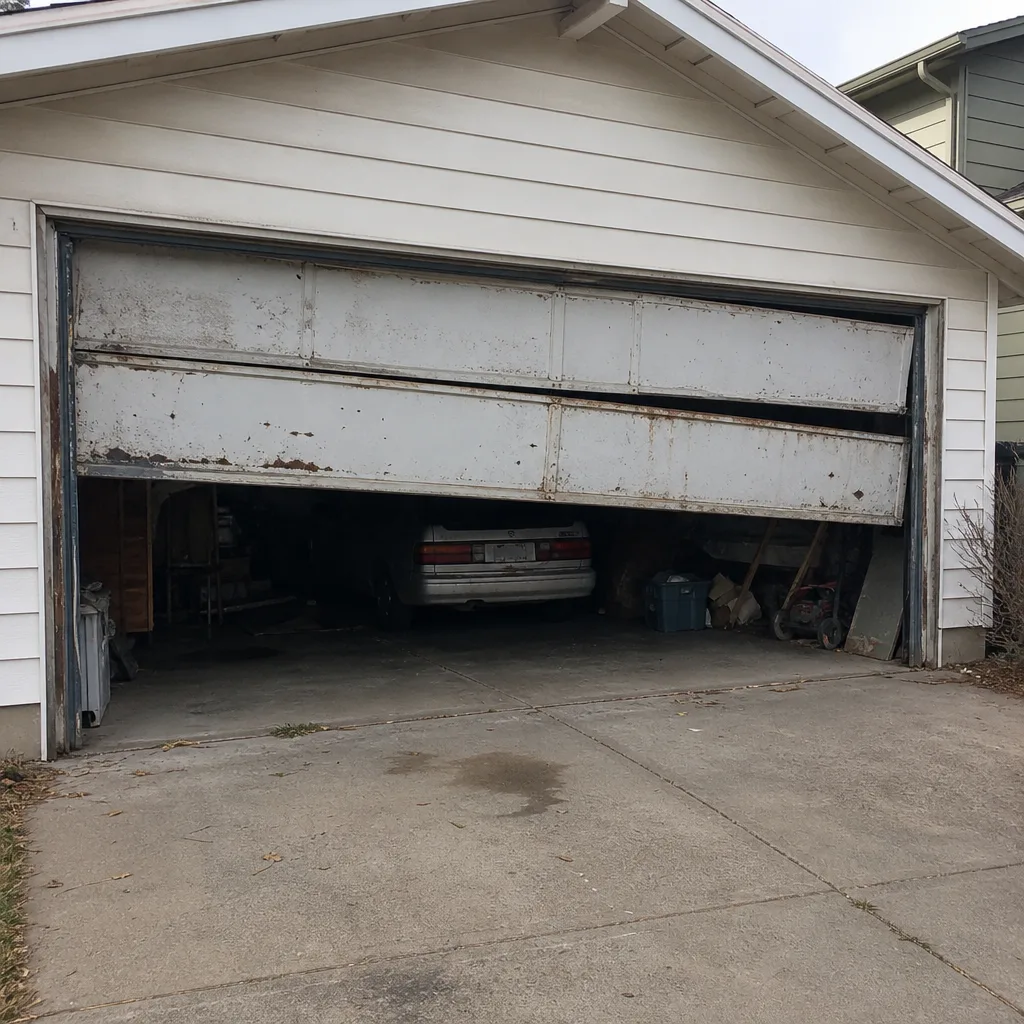 Before
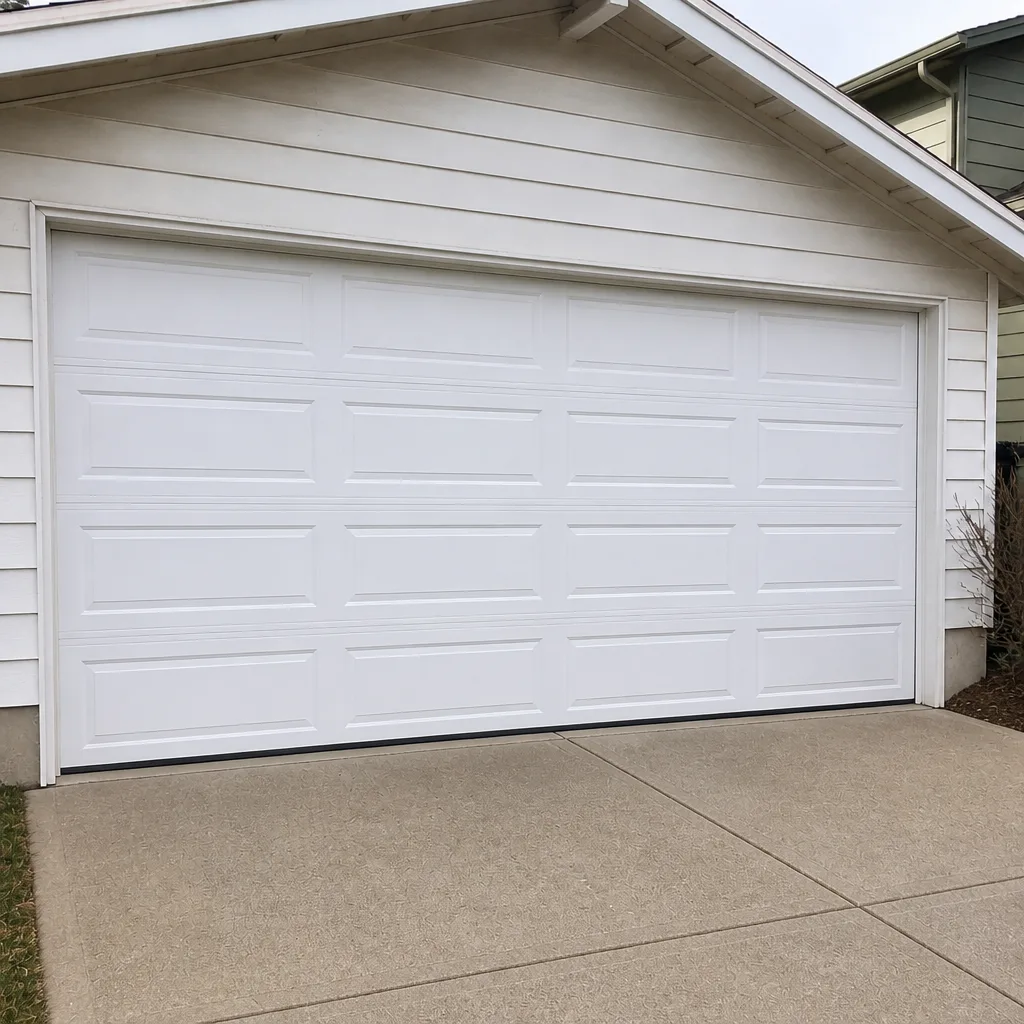 After
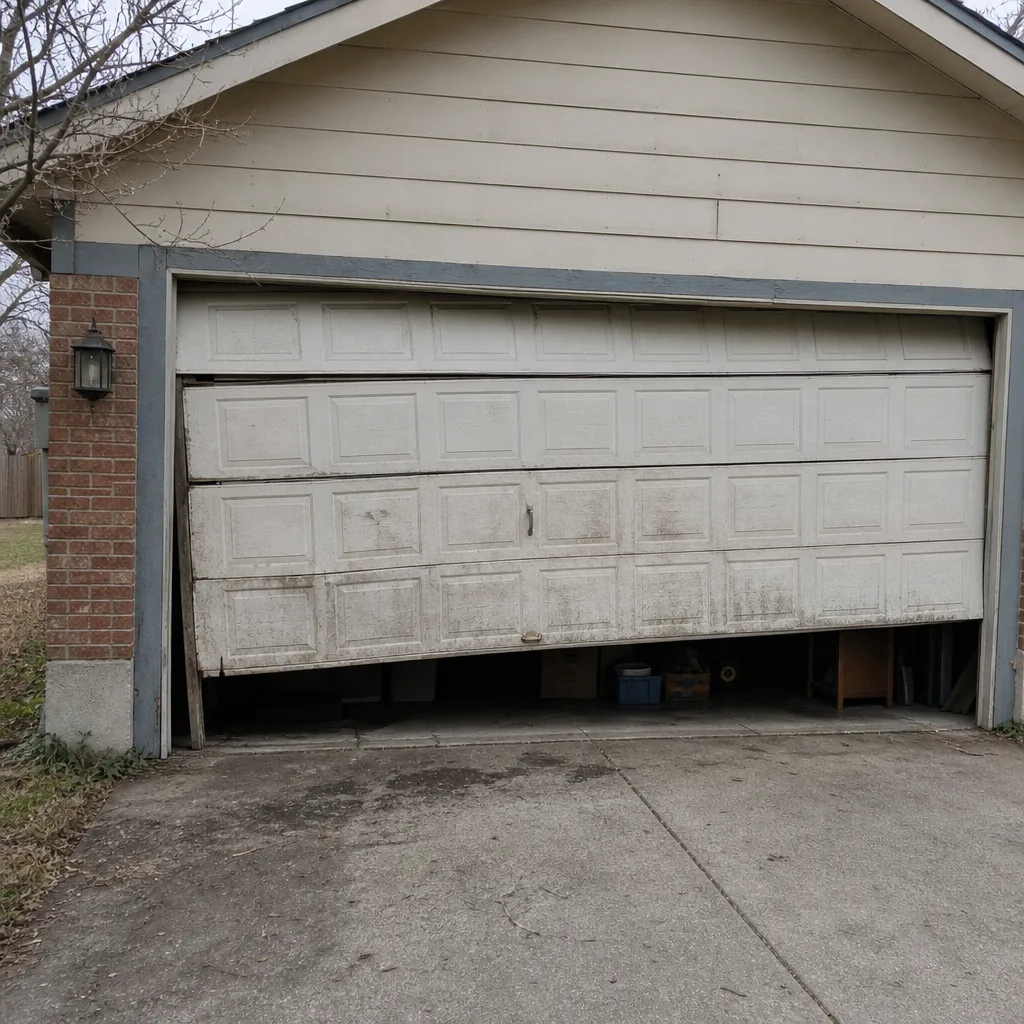 Before
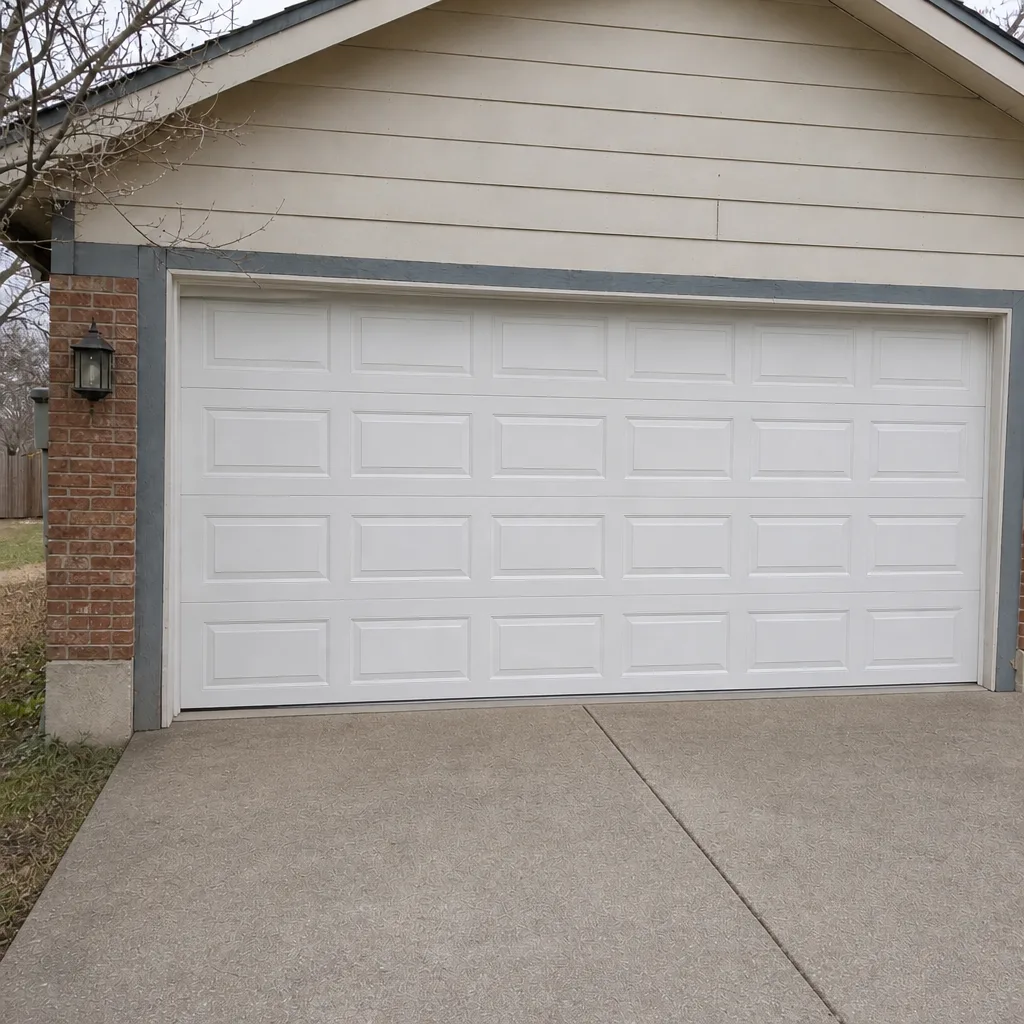 After
When to Call a Professional
Call a professional if you hear a loud pop from the springs, see a frayed or kinked cable, notice the door hanging crooked, or find that the safety reverse no longer works. Those are stop-using situations, not watch-it situations. Call also if the opener hums without moving the door, if the door drifts down after closing, or if a grinding noise has gotten louder over a few weeks. And call if you’re simply not sure what you’re hearing; describing a sound over the phone is often enough to put it in the right tier. Garage Door Repair Meadow Hills offers free estimates in Meadow Hills. Call (855) 337-1334. We answer 24/7. Fast dispatch from 7am to 7pm, Sunday through Friday. The price is quoted and agreed before any work starts, so there’s no surprise on the invoice.
Frequently Asked Questions
The most serious signs are a loud bang from the spring area followed by a door that won’t lift, a visibly frayed or kinked cable, a door that hangs crooked, and a door that no longer reverses on contact. Any of these means stop using the door until a technician inspects it. Call (855) 337-1334 for a free estimate.
Grinding usually points to dry or worn rollers, dry hinges, or a bearing that’s lost lubrication. It’s rarely an emergency, but it wears the moving parts faster with every cycle and can eventually load the opener. It’s a schedule-within-30-days issue rather than a stop-using one. Call (855) 337-1334 for an exact quote; estimates are free.
Look for a gap in the torsion coil, deep rust with flaking wire, uneven spacing between coils, or an extension spring that’s visibly longer than its partner. Any of those means the spring is stressed and should be looked at before it fails. Don’t touch or adjust the spring yourself. Call (855) 337-1334 and we’ll book a free estimate.
No. A door with a broken spring is extremely heavy and the remaining spring is carrying twice its load, which puts the whole system at risk. Keep the door closed and call for spring repair. Call (855) 337-1334. We answer 24/7. Fast dispatch from 7am to 7pm, Sunday through Friday.
Cold weather makes steel springs more brittle, freezes the bottom seal to the concrete, and causes track and frame contraction that can bind a roller. The first cold snap of the season is when doors that have been slowly losing tension tend to fail. If a door that ran quietly in summer starts complaining in winter, call (855) 337-1334 for an exact quote; estimates are free.
No. The written quote you agree to before work starts is the price. We tell you what we found, what it costs, and what the options are, then we do the work at the quoted price. Call (855) 337-1334 for a free estimate.
The Bottom Line
Garage door failures announce themselves well before they happen. The skill is knowing which signal goes in which tier: cosmetic issues go on a watch list, functional problems get scheduled within 30 days, and safety hazards mean the door stops moving. Grinding, popping, and scraping each point to a different part, and knowing whether the opener is straining or the door is resisting tells you what actually needs fixing. In Meadow Hills, add seasonal spring brittleness, frost-stuck seals, and track contraction to the list. The full-spectrum specialists at Garage Door Repair Meadow Hills handle diagnosis, repair, parts, and installation for the brands you already own. When something sounds wrong, call and describe it.
Call (855) 337-1334 for a free estimate. We answer 24/7. Fast dispatch from 7am to 7pm, Sunday through Friday. The local pro is licensed and insured as their state requires, and we work with your insurer when a claim applies.
Written by the team at Garage Door Repair Meadow Hills.